
new
what’s new
Features & Functions
Brands
Colors
wishlist


Wearing a Down Jacket for Winter Sports: One of the Most Common Mistakes
This mistake has nothing to do with the waterproofing of down jackets. Instead, it’s about a fundamental principle of outdoor sports and layering: the clothing your body needs while at rest is completely different from what it needs during physical activity.
Let’s take a famous example: Dutch speed skater Jutta Leerdam, who went viral for unzipping her jacket immediately after finishing a race

The thing is, many speed skaters make the same move right after finishing a race: unzipping their jacket.

Why do they unzip their jackets? Because they’re hot!
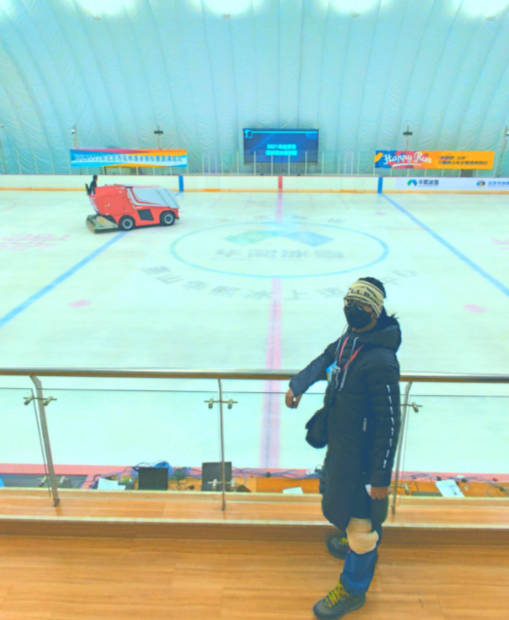
Are ice skating arenas warm? Of course not. Here’s a photo of me working at an ice rink:
At this point, we need to understand the first key principle:
The human body generates a lot of heat during exercise.
How much heat are we talking about?
When a person exercises, their body can consume several hundred watts of energy. Professional athletes can even exceed 1,000 watts, whereas at rest, the body consumes less than 100 watts, and even less during sleep.
This brings us back to what I mentioned earlier: the clothing needed for the human body at rest is very different from what it needs during exercise. To compare accurately, we need to introduce a concept called Metabolic Equivalent of Task (MET).
MET (pronounced “met”) is a measure of relative energy expenditure and the intensity of physical activity. Generally speaking:
Some sources simplify it as: <3 MET = low intensity, 3–6 MET = moderate, >6 MET = high intensity.
The key takeaway: exercise comes in different intensity levels, and your clothing choice should account for how much heat your body will generate.


People who do fitness are usually familiar with the MET concept, using it to estimate how many calories they burn during exercise and to maintain a healthy level of activity. For example, the World Health Organization (WHO) recommends that adults aged 18–64 achieve 600 MET-minutes per week, which is equivalent to about 150 minutes of brisk walking or 75 minutes of jogging.
For outdoor enthusiasts, however, MET is used to estimate how much insulation (in clo units) is needed in clothing.
Clo is a unit that measures thermal resistance (i.e., warmth). Note that this clo is not the same as the “clo value” often listed for materials like polyester batting or down. Many popular media sources confuse the two. The material-based “clo” is actually measured in clo/oz/yd², but people casually refer to it as “clo value” in everyday language.
It’s similar to the relationship between grams and gram weight. The former represents the absolute value of the finished product, while the latter reflects the performance of the material.

This value is actually quite intuitive. By definition, 1 clo refers to the thermal insulation provided by clothing that makes a person feel comfortable while sitting still (less than 2 MET) in an environment of 21°C, relative humidity ≤59%, and wind speed ≤0.1 m/s.
In simple terms, it’s roughly equivalent to a light long-sleeve jacket.

The clo values of different clothing layers can be added together. For example, if you’re wearing only thermal underwear but no socks, your total insulation is lower than if you wore thermal underwear with socks—in simple terms, you’ll feel colder without socks.
The lower limit of clo is 0 clo, which corresponds to nakedness. For typical clothing, a meaningful upper limit is around 4 clo, which would be a full-body coverage with very thick insulation.
Here’s a rough guideline:
As always, this table doesn’t correspond perfectly to every person or every piece of clothing, but it gives a general trend.

Some professional outdoor brands’ extreme cold down jackets have the following clo values (according to one source from foreign users):
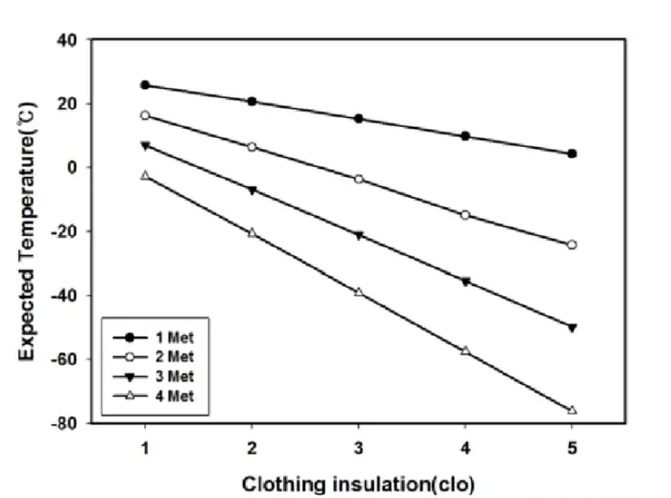
Now that we’ve introduced the concept, here’s the key point: the higher your MET value, the lower the clo value you need in clothing.
For example, looking at a rough guideline:
This table isn’t precise, and obviously, different people tolerate cold differently depending on conditions (e.g., whether they’ve eaten), but the general trend is clear: the higher your activity level, the less insulation you need.
In simple terms: the more intense your activity, the thinner your clothing can be.
So, why do athletes wear such thin clothing while skiing?
A typical set of ski wear plus a base layer provides roughly 1 clo of insulation. At high enough MET values, this isn’t just warm enough—it can actually make them feel hot.
All of the above actually has formulas behind it, but I won’t bother showing them—they’re confusing even to me.
In plain language: if you need a sweater while sitting still, you only need a tank top while playing basketball. If you need a light down jacket while playing cards, a shell jacket is enough for skiing. Never wear the same thick clothing during exercise that you wear when sitting idle.
That’s why professional outdoor brands usually classify the temperature ratings of insulated clothing according to activity level: resting, low-intensity, and high-intensity activity. At the very least, they separate static warmth and dynamic warmth in their ratings.
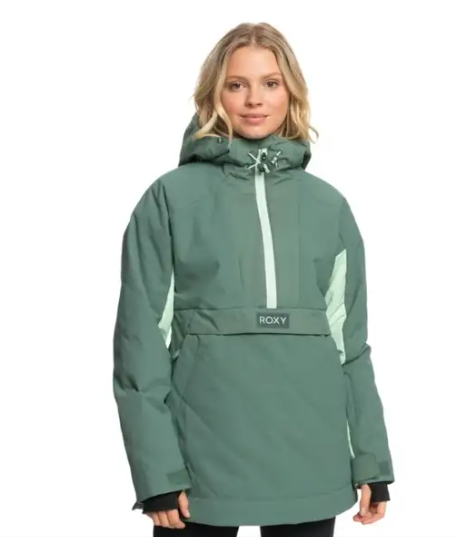
Some ski jackets do have padding, but it’s usually thin insulation. These types of jackets are mostly for snowboarding or casual/recreational skiing.
Professional ski wear is part of a complete functional clothing system. By adjusting the middle layers, you can adapt to different temperatures: if it’s warm, you can wear a breathable, hole-filled compression layer; if it’s cold, you can add a thin insulated mid-layer.
Adding thickness via the middle layer is more scientific, practical, and flexible than simply making the outer jacket thicker. That’s why the ski jacket itself only needs to be a thin outer shell.
Why ski jackets generally don’t use down:
Reason 1: Down is extremely sensitive to moisture. Once it gets wet, its insulation drops dramatically. And during intense exercise, your body inevitably releases a lot of moisture. Even the water-resistant down developed in recent years can’t fully solve this problem. For example, the phone I keep near my chest always gets damp from condensed water vapor released by my body while skiing.
Reason 2: Down is highly compressible. As a mid-layer, it can be easily compressed, greatly reducing its insulation. So when do skiers actually wear down jackets? Usually only when sitting on a ski lift. During skiing, you take it off and store it in your backpack. This is especially important on long runs or when waiting in lift lines after a lap, where low activity levels combined with slight sweating can make your body feel very cold.
Reason 3 (the main point of this article): Wearing down jackets during typical cold-weather exercise is almost always too hot. What do I mean by “typical cold”? At around -20°C, even moderate-intensity exercise doesn’t require a down jacket—a thin insulated layer of 40–60 g is sufficient. On Beijing ski slopes, where daytime temperatures are just below freezing and nighttime temperatures are around -10°C, wearing a down jacket while skiing is simply unnecessary.
I’ve mentioned this many, many times before: staying dry is critical in outdoor sports. When you get hot, you sweat. When you sweat, your clothes get wet. Water has a thermal conductivity 20 times that of air, so wet clothes can quickly rob your body of heat. You don’t even need subzero temperatures—just around 10°C with wet clothing can be life-threatening. A tragic example is the Gansu Baiyin ultramarathon disaster a few years ago.
All materials used in outdoor clothing—whether waterproof fabrics like Gore-Tex, eVent, Dermizax, Neoshell, or quick-dry layers like Delta, Powerdry, Powergrid, Power Stretch, or insulation layers like P100, P200, P300, Hiloft, Primaloft, or even modern water-resistant down—are designed with one core goal: keeping the body dry. Only when your body and clothing stay dry can you maintain body temperature outdoors.
Even at slightly cold temperatures, if your clothing gets wet, you’re already in serious danger. Most hypothermia cases in past mountaineering accidents—like the Ao-Tai incidents—occurred because beginners wore thick cotton “warm underwear”. First, their bodies overheated and they sweated a lot; then, the soaked cotton became ice-cold, rapidly stealing body heat and causing hypothermia. Temperatures were only a few degrees below zero, and people had down jackets, tents, and sleeping bags—it wasn’t extreme cold.
Falling off a mountain and dying can be considered an accident, but freezing at these temperatures is a result of completely misunderstanding outdoor clothing science—a basic mistake. If you do outdoor sports, you need to follow scientific principles, not just intuition. Just because it’s cold doesn’t mean you should wear the thickest clothing possible. You have to understand why you’re cold. Sometimes, scientific practices go against intuition—like counter-steering when a car skids. Outdoor safety works the same way.
My personal experience with ski clothing layers:
I’m a beginner at skiing, so my speed is low and I don’t make many movements. That means, at the same temperature, I wear slightly thicker clothing for skiing than for hiking. For example, if I wear a Powerdry layer for hiking, I switch to Powergrid for skiing.
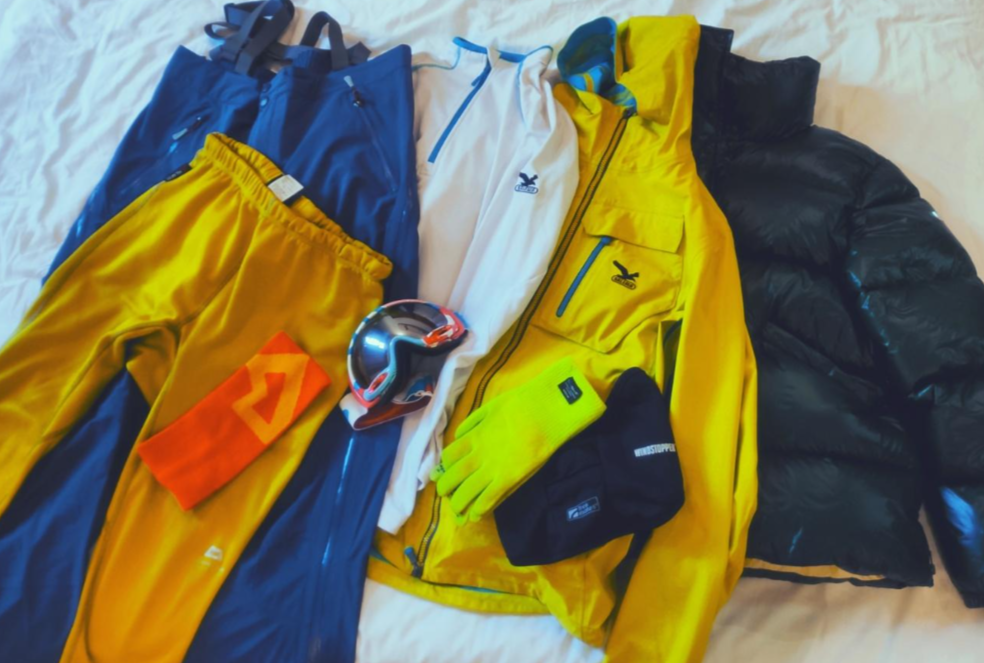
I haven’t skied at Chongli myself because my skills are too basic, but based on feedback from friends: when skiing there at -20°C, wearing a single-layer ski jacket on the outside with a P100–P200 fleece mid-layer is usually enough. People who get cold easily can wear a bit thicker, like a lightly insulated ski jacket.
I once skied at just below freezing wearing a fleece layer, and I felt way too hot. If you’re wearing a padded ski jacket, in weather that isn’t extremely cold, I strongly recommend pairing it with the thinnest quick-dry base layer (or Merino wool). Also, try to choose ski jackets with underarm ventilation zippers.
Even some affordable ski jackets work well for casual use—they look flashy, not too “outdoor,” and during light snow or sleet, they can be both waterproof and warm.
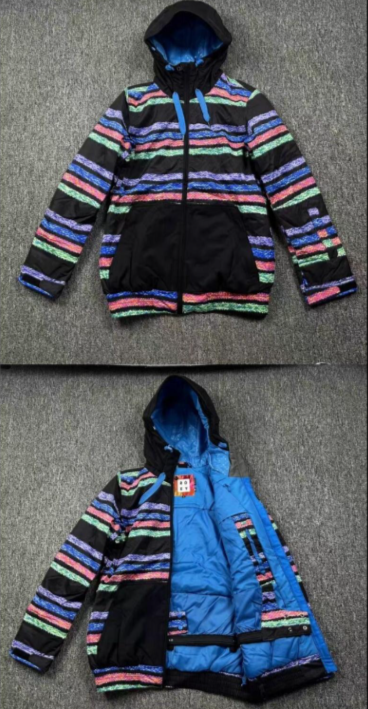
In short, as long as you maintain a moderate to high level of activity, you won’t feel cold. The real risk is wearing too many layers.
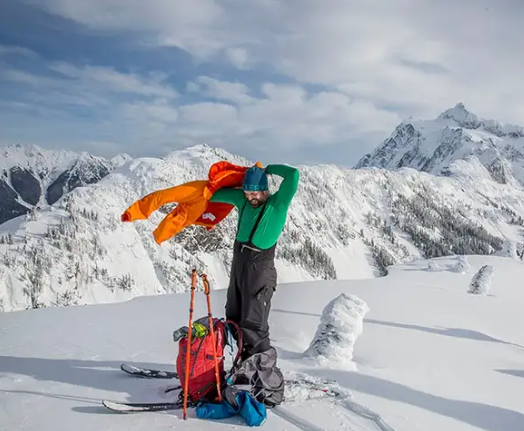
For the outer layer, if you’re a beginner and fall often, you still need waterproof clothing. If you’re intermediate or advanced and rarely fall during a full day of skiing, you can even wear any type of clothing, like regular sportswear. Of course, it’s still best if the outer layer is windproof and has a bit of stretch.
In China, most ski resorts are park-style slopes for downhill skiing. Beginners are usually just trying it out, and they won’t go off-piste into the mountains, so any clothing is fine. The key is temperature control, not waterproofing. Learn to layer your clothing: wear a quick-dry base layer, and adjust your layers according to actual needs.
As long as you don’t encounter sleet, the waterproof requirement for your jacket is very low. Many ski jackets use Toray Dermizax, which has a lower waterproof rating than Gore-Tex, because Dermizax is more stretchy, and skiing doesn’t require extremely high waterproofing.
Before Gore-Tex became popular, people used to ski in wool sweaters or regular sportswear.
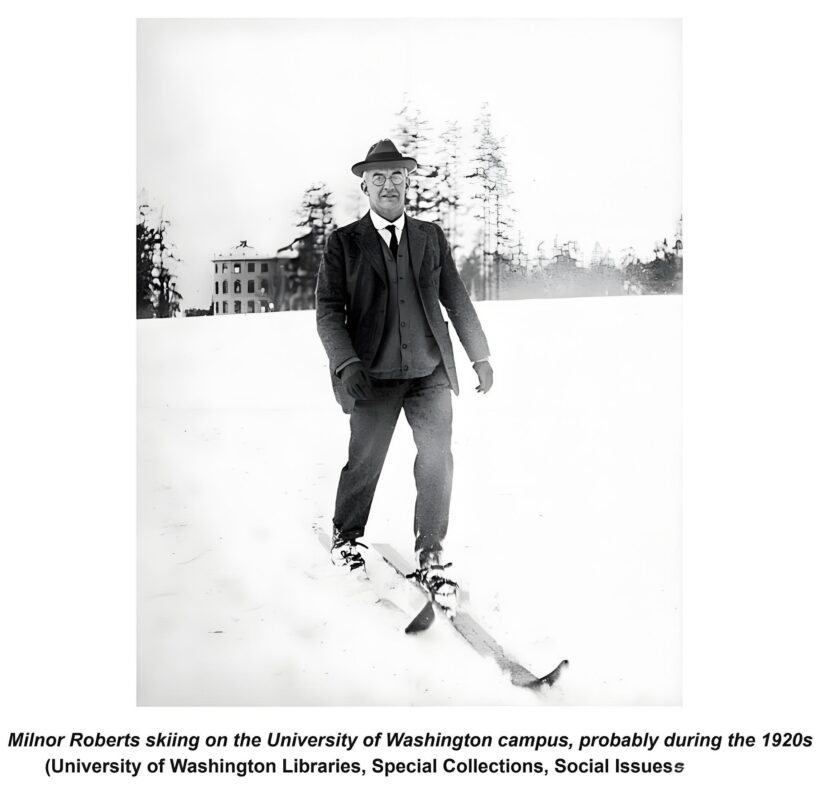
Summary: Skiing in a down jacket → Overheating → Sweating → Wet → Very cold.
In my personal opinion, unless you’re part of an expedition to the Arctic or Antarctic with temperatures below -30°C, wearing a down jacket while skiing is a bad idea. On ordinary ski slopes, especially for beginners, wearing a down jacket at temperatures just below zero will make you overheat quickly, sweat heavily, and wet the down, which ruins its insulation.
Of course, if you’re just standing at the bottom of the slope, slowly trying out skiing, or taking photos, wearing a down jacket is fine. Most casual visitors do this, and it’s perfectly okay.
But remember: always rent a helmet, always rent a helmet, always rent a helmet.


