
new
what’s new
Features & Functions
Brands
Colors
wishlist


Generally speaking, ski jackets ≈ hardshell jackets.
In other words, what we usually call a “hardshell” is basically a waterproof jacket.
So, what’s the difference between a ski jacket and a hardshell?
Here’s my hardshell from the ski brand Montain Force+. With the snow skirt attached at the waist, it becomes a ski jacket; remove the skirt, and it’s simply a hardshell jacket.

And—
A waterproof jacket only differs in fabric; its appearance doesn’t necessarily define the style.
For example, the ones below are also my jackets — all of them waterproof:

Exactly — they’re all waterproof. Truly waterproof, not just water-repellent. I have quite a lot of jackets like this.
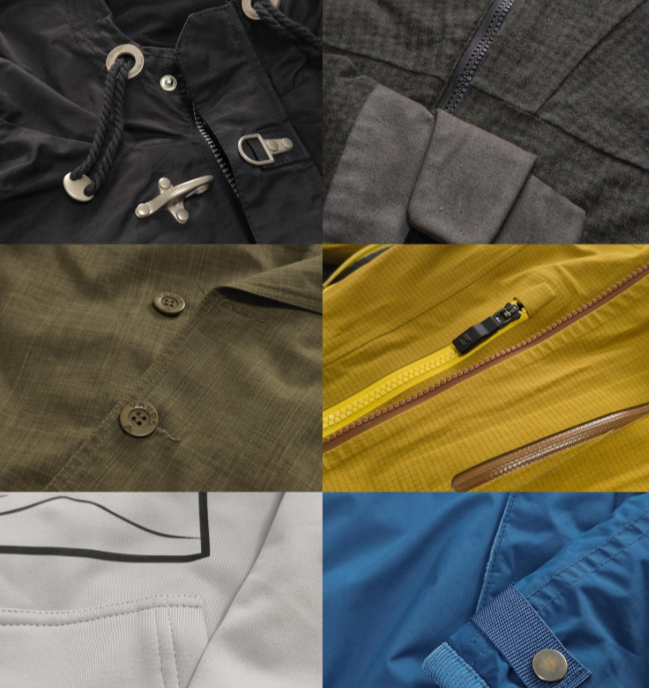
So now you get it, right? As long as a jacket is made with waterproof fabric and its seams are sealed, it can be called a hardshell. It’s just that the appearance might not always look like what people typically imagine a “hardshell” to be.
Aside from office workers who need waterproof clothing for commuting in rainy or snowy weather, and aside from hikers and mountaineers engaged in purely outdoor sports, many other professions also require waterproof gear — such as golfers, equestrians, sailors, oil workers, loggers, farmers, fishermen, forest rangers, scientific expeditions, rescue teams, sanitation workers, delivery riders, couriers, police officers, and soldiers. Even leisure activities like fishing and hunting also call for waterproof clothing.
Here’s the PEARLY GATES catalog I mentioned earlier — it’s a golf brand. Some of the clothing in this collection is waterproof, some is not, but when presented together, they don’t look out of place at all, do they?

The waterproof styles are made with Mitsubishi’s DiAPLEX fabric.

Now take a look at this one — also made with DiAPLEX fabric. Its appearance looks much more like a “hardshell jacket,” doesn’t it?

And here’s another one, also made with DiAPLEX fabric — but this brand and its look are much more like a “ski jacket,” right?

In fact, compared with hardshell jackets, ski jackets put less emphasis on waterproofing and more on breathability and flexibility. That’s why many ski brands don’t use the famous Gore-Tex+, but instead choose fabrics like Toray Dermizax+ or Mitsubishi DiAPLEX.
What’s more, ski jackets are inherently more suitable for everyday wear in terms of design. Skiing has long been embraced and promoted by the upper class, so ski apparel naturally leans closer to casual fashion.
Think about it — you can easily imagine a movie star, inspired by a James Bond film, dreaming of skiing in the Alps with a rugged hero like Bond, then relaxing in a hot spring with a cup of coffee. But it’s almost impossible to imagine her longing to join a mountaineering expedition.

Ski brands like Holden, Aztech Mountain, Templa, BOGNER, and Toni Sailer are essentially fashion brands operating under the name of skiing.
Additionally, many technical apparel brands — such as Aether Apparel, Arc’teryx Veilance, Mission Workshop, QOR, NINOX, Outlier, Rohan, Soar, State Concepts, Engineered for Motion, and UBER — produce waterproof clothing with clean lines and a slightly more business-oriented look. They aren’t called ski jackets, but in terms of style, they’re not much different from casual ski apparel.
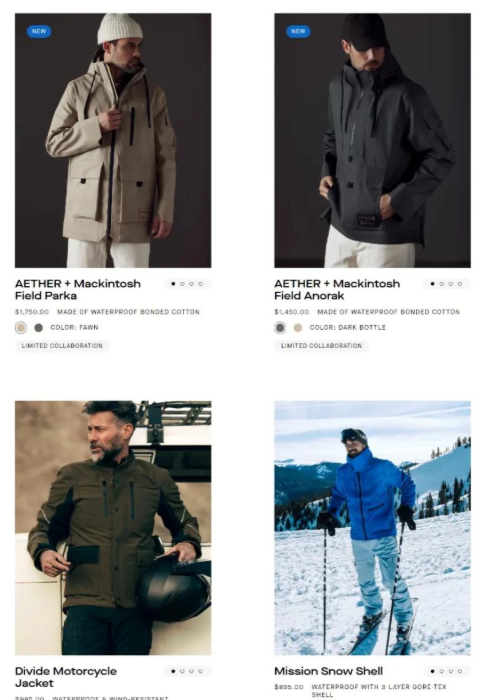
Snowboard jackets are even more suitable for everyday wear than alpine ski jackets.
That’s because snowboards, skateboards, and surfboards share a lot in common. Many snowboard jackets look just like street-style skateboarding apparel — some aren’t even waterproof and are essentially just pullovers.
Regarding menswear — based on my limited observation and understanding — men’s clothing can generally be categorized as:
When these clothes first appeared, none of them were intended for fashion — they were all developed for very specialized, niche purposes. Only later did they become mainstream everyday wear.
So, hardshell jackets and ski jackets originally come from sportswear. Over time, just like polo shirts once reserved for polo players or overalls once worn only by workers and farmers, they’ll eventually become completely ordinary casual wear.


