
new
what’s new
Features & Functions
Brands
Colors
wishlist

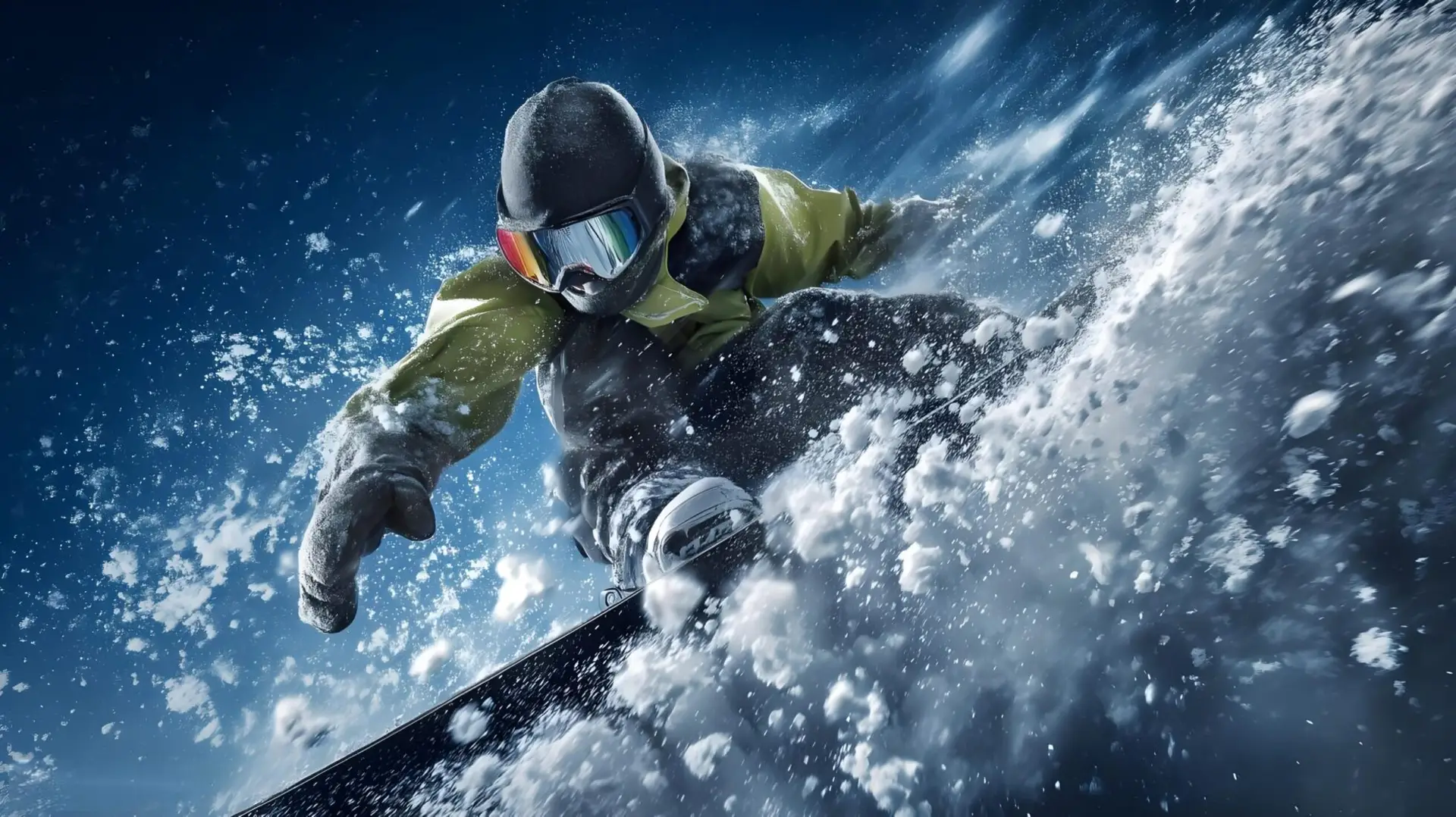
Discover the essentials of ski jackets—from technical features that keep you warm and dry to leading brands known for quality and innovation. Explore our curated selection and choose the ski jacket that best fits your style, performance needs, and winter adventures.
By design, ski jackets can be divided into two main categories: two-piece and one-piece.

Two-piece ski jackets are the most common choice. They’re highly practical and versatile, allowing you to mix and match different tops and bottoms. Typically, they’re paired with high-waisted bib pants to help keep snow from getting inside your clothes.
One-piece ski suits offer the best protection against snow entering at the waist when you fall. However, they’re much less convenient to put on and take off. One downside—at least for some of us—is that they can make your legs look shorter (sad but true!). For beginners who also love taking great photos on the slopes, this might feel like an extra challenge.

Classic Styles
These are the most common designs offered by nearly every major ski wear brand. They feature clean, timeless silhouettes that suit all age groups and never go out of style.
Trendy Styles
Often designed as pullovers that look similar to hoodies, these styles appeal especially to younger snowboarders. Since snowboarding tends to have a more expressive and edgy vibe, pairing it with loose-fitting, fashion-forward ski wear creates a look that feels energetic and bold.

Shell Jackets
Also known simply as “shells,” these are lightweight single-layer jackets that provide windproof, waterproof, and breathable protection. While they offer less warmth on their own, it’s common practice to rely on mid-layers and base layers for insulation rather than the outer jacket itself (more on that later).
Insulated Jackets
These typically feature added warmth through synthetic fillings like hollow fiber, Dupont™ Sorona®, Thinsulate™, or natural down. Insulated jackets are ideal for extremely cold conditions when extra warmth is essential.
Personally, I recommend shell jackets—they’re more versatile and adaptable to a wider range of weather conditions.
The most common way to dress for skiing is the three-layer system:
First Layer: Base Layer (Moisture-Wicking)
This is the innermost layer, ideally made of tight-fitting, quick-dry fabric. It doesn’t have to be expensive—a simple compression top or quick-dry shirt works well. Even though ski resorts can be very cold, skiing itself is intense physical activity, so you’re likely to sweat. The main purpose of this layer is to wick moisture away from your skin and keep your body dry and comfortable.

Second Layer: Mid Layer (Insulation)
Temperatures on the slopes can get quite low, so this is where most of the warmth comes from. Typical choices include fleece or down jackets. Fleece offers excellent breathability, while down provides superior insulation (lightweight down is usually enough). You can adjust the thickness and number of mid layers depending on the weather:
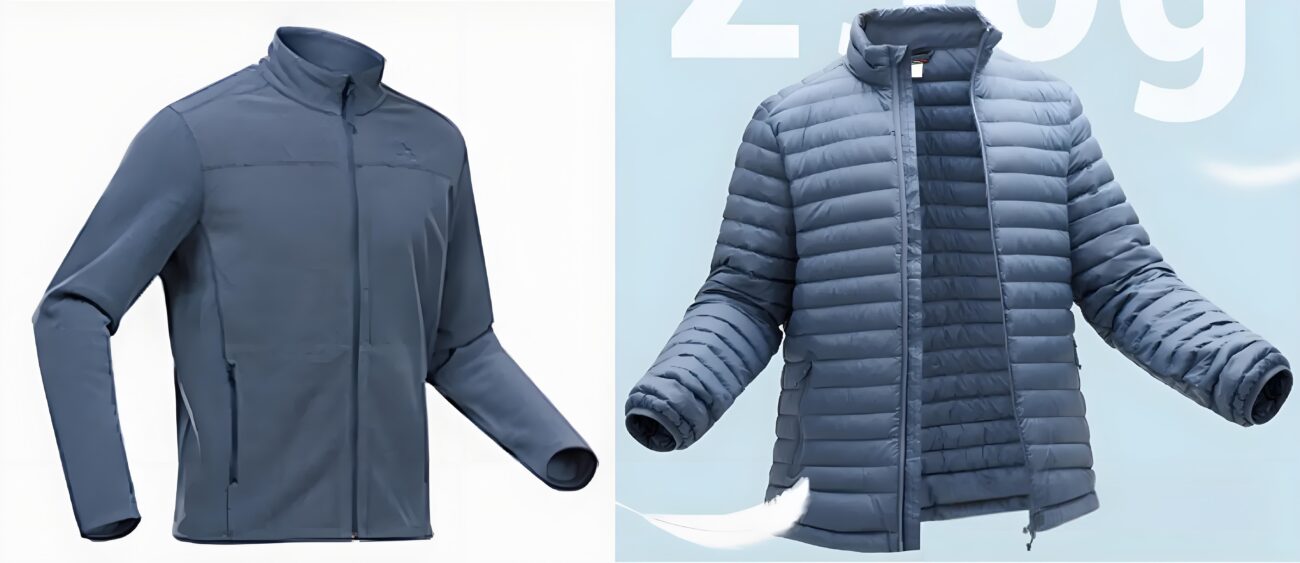
Third Layer: Outer Shell (Windproof & Waterproof Layer)
This is what we usually call the ski jacket. Its main purposes are to keep out wind and water, provide breathability, and withstand wear and tear — more details below.
1) Waterproofing
It goes without saying: you’ll be in constant contact with snow while skiing. Beginners may fall frequently, and advanced skiers often ride through powder. Snow will inevitably stick to your clothing, and if your jacket isn’t waterproof, it will quickly get wet — leaving you cold and uncomfortable on the slopes.
Ski jackets typically have a waterproof rating ranging from 5,000 mm to 20,000 mm.
For example, a 10,000 mm waterproof rating means the fabric can withstand the pressure of a 10-meter-high column of water for an hour without leaking.
2) Breathability
As mentioned earlier, skiing is a physically intense activity that generates a lot of heat. If the heat and moisture inside your jacket can’t escape efficiently, sweat will accumulate, and even the best quick-dry base layer won’t keep you dry.
A 10,000 g/m²/24h breathability rating means the fabric can release up to 10,000 grams of water vapor per square meter over a 24-hour period.

Compared to waterproofing, breathability is much harder to achieve. Sure, a plastic bag is completely waterproof—but is it breathable? Definitely not.
That’s why mid-to-high-end ski jackets often emphasize breathability, while lower-priced options tend to skip this feature. However, they have their own workarounds.
As the saying goes: “When performance isn’t enough, zippers come to the rescue.”

Many ski jackets include ventilation zippers under the arms or even along the inner thighs to boost airflow. High-end jackets usually feature underarm zippers that provide excellent breathability without compromising waterproofing.
The two most important factors when selecting a ski jacket are: your needs and your budget.
Needs:
Budget:
If you’re new to skiing, there’s no need to spend a lot on an expensive jacket. A jacket under 500 RMB is sufficient. Honestly, high-end jackets often don’t show their true performance if you don’t ski regularly. If your main goal is to look good in photos, simply choose a stylish jacket without worrying too much about technical features.
For those who have been skiing for several years, it makes sense to consider jackets priced over 1000 RMB with higher performance requirements — for example, waterproof ratings above 10,000 mm. If your budget is tight, prioritize performance over looks; if you have more flexibility, you can go for both performance and style.
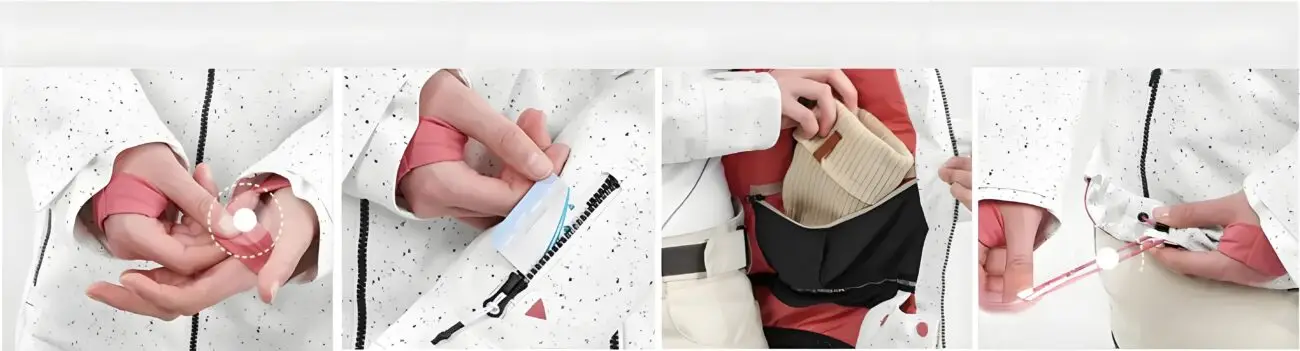
When selecting a ski jacket, pay attention to some important design details that enhance functionality:

The most important factors when choosing a ski jacket are knowing your needs and budget.
In general, price and performance go hand in hand.
If you want good performance but don’t want to spend much, that’s almost impossible to achieve.


